Exit Credit Card Wallet Reload Surcharges & Debt Cycles
Learn how wallet reloads trigger MCC 6540 bank fees and cancel your grace period. Understand your legal rights under RBI rules and discover how to settle heavy card debt.
- What is MCC 6540: It is a merchant code for wallet funding. Card networks use it when you add cash to mobile wallets.
- Extra Surcharges: Banks add a fee of 1% to 2.5% plus GST on wallet loads. This fee appears on your card bill.
- No Grace Period: Many banks treat wallet loads as cash advances. Interest starts from day one at up to 45% APR.
- The Rotation Trap: Moving card money through wallets burns 5% to 8% in fees per cycle. Debt grows very fast.
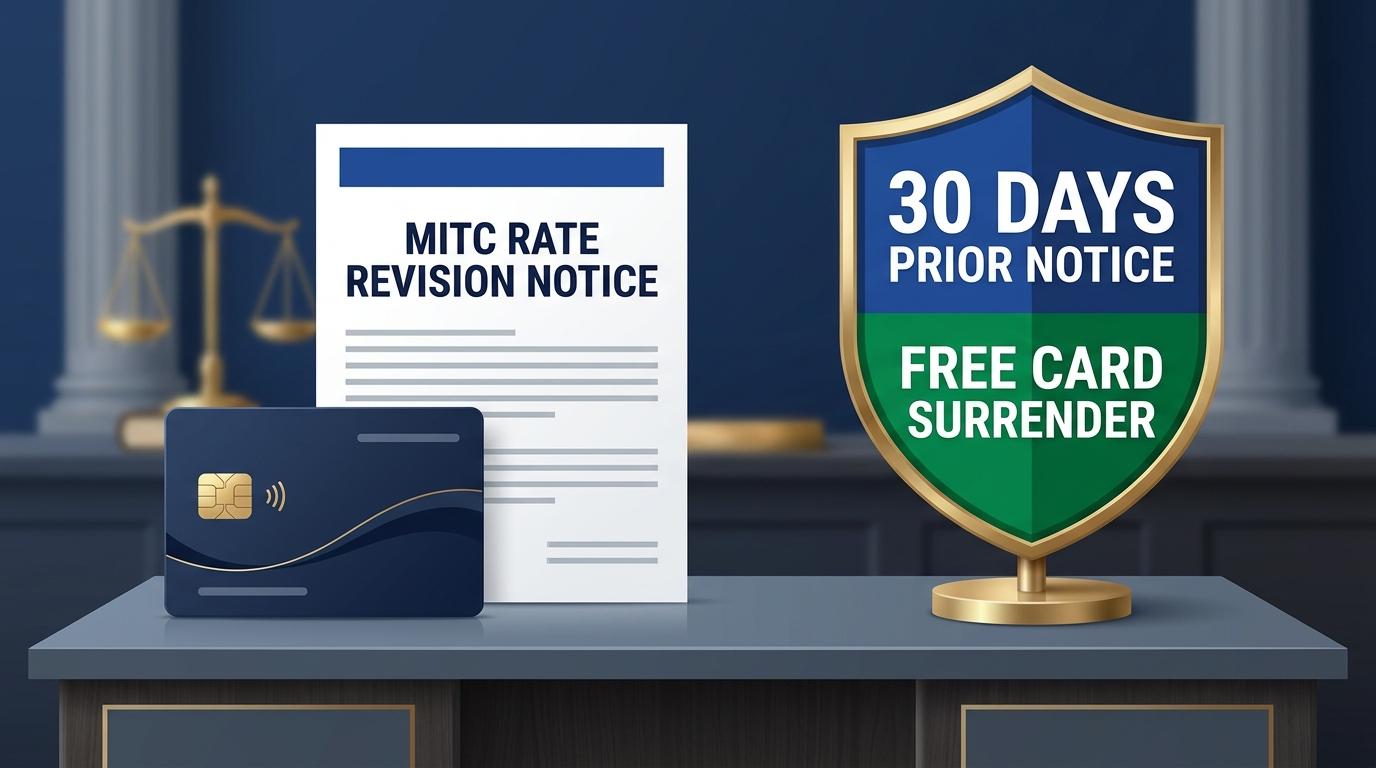
- RBI Notice Rule: Banks must give 30 days prior notice before adding new fees. You can dispute unannounced charges.
1. MCC 6540 Explained: Anatomy of the Wallet Load Fee
A Merchant Category Code is a four-digit number. Networks like Visa and RuPay use it to tag merchant services. When you load a mobile wallet, the bank tags the swipe under MCC 6540.
This code covers wallet funding and stored value cards. In plain words, you turn card credit into digital cash.
Banks noticed that cardholders load wallets to get quick cash. Borrowers also rotate money between cards. To stop this, banks added heavy fees:
Direct Surcharges
Banks add a fee of 1% to 2.5% plus GST on every wallet load swipe.
Zero Rewards
Wallet top-ups earn no reward points, no cashback, and no milestone credits.
Quasi-Cash Rules
Many banks remove the free credit window. They charge daily interest from day one.
2. The Surcharge Math: How Wallet Reloads Create Debt
Many users think wallet loads only cost the small fee shown in the app. In truth, several hidden fees hit your credit card balance at once.
When you load a wallet and move funds to a bank account, you pay three separate fees:
| Fee Category | Standard Rate | Charged By | Cost on ₹50,000 Load |
|---|---|---|---|
| Wallet Convenience Fee | 1.5% to 2.5% + GST | Wallet App (Paytm/Mobikwik) | ₹1,180 |
| Bank MCC 6540 Surcharge | 1.0% to 1.5% + GST | Card Issuing Bank | ₹590 |
| Wallet-to-Bank Payout Fee | 2.0% to 3.5% + GST | Wallet Platform | ₹1,475 |
| Total Direct Cash Loss | 4.5% to 7.5% | All Intermediaries | ₹3,245 (6.49%) |
In this example, you borrow ₹50,000 but receive only ₹46,755 in cash. You owe the full ₹50,000 plus interest while losing ₹3,245 to fees.
3. Quasi-Cash Traps: Immediate Day-One Finance Charges
The biggest risk with MCC 6540 is the quasi-cash label. Normal retail purchases enjoy a free credit window of 20 to 50 days. But quasi-cash transactions do not get this benefit.
Quasi-cash means any transaction that turns into cash quickly. This includes lottery tickets, gaming tokens, and mobile wallet loads. For these swipes, banks charge interest right away.
Credit card interest is high. Banks charge 3.5% to 3.75% per month (42% to 45% a year). You also pay 18% GST on that interest. If you load a wallet on day 5 of your cycle, interest runs for 25 days before your bill arrives.
If you carry a past balance, things get worse. You lose the grace period on all new spends. Daily interest piles up quickly, making your debt hard to pay.
4. The Money Rotation Trap: Why Cardholders Get Stuck
When cash runs short, many cardholders rotate money between cards. A borrower loads a wallet using Card A. Next, they send that money to a bank account. Then they pay the minimum due on Card B.
Next month, the borrower repeats the process. While this delays default, the math causes quick financial trouble:
Heavy Fee Leaks
Every rotation loses 5% to 7% in fees. Rotating ₹1,00,000 four times burns over ₹25,000 in pure fees without clearing any debt.
Credit Limits Run Out
Fees and interest eat up your limit. Soon, you can no longer reload wallets to pay minimum dues.
Sudden Default Spiral
When rotation stops, multiple cards default at the same time. Late fees and interest surge, and recovery agents start calling.
5. Visual Blueprint: Wallet Load Debt Resolution Flow
This diagram shows how wallet rotation leads to debt traps. It also explains the legal steps to dispute fees and resolve your debt.
6. RBI Master Directions: Credit Card Surcharge Rules
The Reserve Bank of India regulates credit card operations. Lenders must follow the Master Direction on Credit Card and Debit Card Issuance and Conduct, 2022:
Clause 7: Clear Fee Disclosures
Card issuers must list all fees and interest rates clearly in the terms document. A bank cannot charge any fee that it did not disclose beforehand.
Clause 9: Mandatory 30-Day Prior Notice
Banks cannot add new fees on MCC 6540 without giving 30 days prior notice. If the bank fails to inform you first, the charge is invalid.
Clause 10: Bureau Freeze During Billing Disputes
When you raise a written billing dispute, the bank must reply within 30 days. The bank cannot report disputed dues to CIBIL while reviewing your complaint.
7. Landmark Court Rulings on Unfair Bank Card Fees
Indian courts protect borrowers from unfair bank fees and illegal interest:
Central Bank of India v. Ravindra (Supreme Court, 2002)
The Supreme Court ruled that banks cannot compound penal interest. Lenders cannot add penalty fees to principal debt to grow charges without legal sanction.
Citibank N.A. v. Rohit Somani (NCDRC, 2013)
The consumer commission held that lenders cannot quietly treat retail swipes as cash advances without clear, advance notice to the customer.
State Bank of India v. Dr. B.L. Sharma (NCDRC, 2019)
The commission confirmed that debiting unnotified charges is a deficiency in banking service and an unfair trade practice.
8. Legal Rights: How Borrowers Can Dispute MCC 6540
If your bank charged unexpected fees on wallet loads without notice, you have clear legal rights:
If the bank failed to send 30 days prior notice about wallet load fees, you can claim a full refund.
Banks cannot mark your account as overdue in CIBIL for charges under active billing dispute.
Under RBI rules, recovery agents cannot call you before 8 AM or after 7 PM or threaten you.
You have the right to get a clear bill showing principal debt, interest rates, GST, and merchant codes.
9. Step-by-Step SOP: Disputing Wallet Load Surcharges
Follow these simple steps to dispute arbitrary fees and safeguard your credit score:
Check Your Statement for MCC 6540
Download your card statement. Look for entries named "Wallet Load Surcharge," "POI Fee," or extra interest.
Send a Formal Dispute Email
Write to the card grievance desk within 30 days. Cite RBI Clause 9 and ask for proof of 30 days prior notice.
Ask to Freeze Bureau Reporting
Instruct the bank in writing not to report the disputed sum as delinquent to CIBIL while they review it.
Stop Money Rotation Right Away
Do not execute new wallet reloads. More rotations will only add more fees and make legal settlement harder.
10. 3-Tier Escalation Matrix: Bank PNO to RBI Ombudsman
If the bank rejects your dispute or fails to reply, follow this three-step escalation path:
Bank Card Division
Submit your written complaint with transaction dates. The bank has 30 days to resolve the matter.
Bank PNO Desk
If unresolved after 30 days, write to the PNO. The PNO has executive power to reverse fees and fix records.
RBI CMS Portal
File an online complaint at cms.rbi.org.in. The RBI Ombudsman can order refunds and compensation.
11. Compromise Settlement: Settle Spiraling Card Dues
When balances spiral due to compounding fees, disputing small charges may not be enough. The total bill often grows beyond what you can afford to pay.
A formal One-Time Settlement (OTS) provides legal closure. CredSettle works directly with your lender to resolve these heavy card debts:
Waiver of Fees and Interest
CredSettle audits your card bills to remove accumulated fees and interest. We negotiate waivers of 50% to 75% on total dues.
Stop Recovery Agent Calls
Our legal team issues formal notices to the bank. This enforces RBI recovery rules and stops recovery agent calls.
Official Bank Sanction Letter
We ensure you receive an authentic settlement letter from the bank. This protects you from third-party agency scams.
Guaranteed No Dues Certificate
Once paid, we secure your official No Dues Certificate (NOC) and verify that the bank closes the account on your credit report.
 Legal Debt Dispute Authority
CredSettle (credsettle.com) is India's premier debt settlement, loan dispute resolution, and legal protection platform. Operating strictly under the RBI Fair Practices Code and CICRA 2005, our advocate panel negotiates directly with Bank Principal Nodal Officers to eliminate waived differentials, obtain unconditional No Dues Certificates (NDC), and upgrade credit bureau records from "Settled" to "Closed".
Frequently Asked Questions: MCC 6540 Wallet Surcharges
Find clear answers to common questions about wallet fees, quasi-cash interest, and legal settlement steps.
Official Regulatory Citations & Statutory References
- RBI Master Direction: Credit Card and Debit Card Issuance and Conduct Directions, 2022 (updated March 2024), Clauses 7, 9, and 10.
- RBI Master Directions on PPIs: Master Direction DPSS.CO.PD.No.1164/02.14.006/2017-18 on wallet operations in India.
- RBI Integrated Ombudsman Scheme, 2021: Section 10, Grounds of Complaint on banking deficiencies and tariff changes.
- Consumer Protection Act, 2019: Section 2(47) (Unfair Trade Practice) and Section 2(11) (Deficiency of Service).
- Supreme Court of India Ruling: Central Bank of India v. Ravindra (2002) 1 SCC 367 on interest compounding limits.
- NCDRC Precedents: Citibank N.A. v. Rohit Somani (2013) on transparency in cash advance categorization.