
How to Trick Recovery Agents and Dodge Harassment

Learn effective strategies to deal with persistent recovery agents

AJ

Ashish Jhangra

Reviewed by CredSettle Team

18-08-2026
7 min read
How to Trick Recovery Agents and Dodge Harassment
0.0/5
Client Rating
0Cr+
Debt Settled
0+
Happy Clients

Share this insight

Help someone else stay informed about debt relief.

KEY TAKEAWAYS

Know your legal rights as a debtor.

Use effective communication to manage agents.

Compare options: handling agents vs legal action.

Take steps to avoid harassment legally.

CredSettle offers solutions to protect your rights.

Understanding Recovery Agent Tactics

Recovery agents are often employed by banks and Non-Banking Financial Companies (NBFCs) to recover overdue loans. In India, the tactics employed by these agents can sometimes border on harassment, despite regulations by the Reserve Bank of India (RBI) prohibiting such behavior. Understanding these tactics is crucial in effectively managing these situations.

Some common strategies used by recovery agents include frequent calling, visiting your residence or workplace, and using intimidating language. They might also involve third-party contacts, which can be embarrassing and stressful. The RBI has laid down guidelines that recovery agents must follow, including maintaining the borrower's privacy and dignity. However, breaches are not uncommon.

Legal precedents in India have seen courts taking a strong stance against harassment by recovery agents. For instance, the Supreme Court of India has upheld the rights of borrowers, emphasizing that recovery should be conducted within the legal framework. It's crucial to document any harassment incidents, including call records and messages, which can be pivotal in legal proceedings.

For those facing undue harassment, professional assistance can be invaluable. Services like anti-harassment help can provide guidance and support in dealing with recovery agents. Additionally, exploring options like loan settlement or personal loan settlement can help you manage your debt more effectively.

Dealing with recovery agents can be daunting, but knowing your legal rights can help you effectively manage these encounters. In India, the Reserve Bank of India (RBI) has set clear guidelines to prevent harassment by recovery agents. These agents must adhere to specific conduct codes, focusing on professionalism and respect.

Under the RBI guidelines, recovery agents are prohibited from resorting to abusive language, threats, or any form of physical violence. If a recovery agent violates these norms, the borrower has the right to lodge a complaint with the creditor or escalate the matter to the Banking Ombudsman. Additionally, the Debt Recovery Tribunal (DRT) provides a legal forum to address grievances against aggressive recovery practices.

Borrowers should be aware that recovery agents are required to work within specific timeframes. Calls or visits should not occur outside of 7 AM to 7 PM. This regulation protects borrowers from unwarranted disturbances during odd hours.

For those seeking to settle their dues amicably, CredSettle offers comprehensive services such as anti-harassment and loan settlement solutions. Understanding these legal rights and utilizing professional settlement services can significantly mitigate stress and discomfort, ensuring a more balanced interaction with recovery agents.

Moreover, recovery agents must present proper identification and obtain explicit authorization from the creditor they represent. This transparency is crucial, as it holds agents accountable for their actions and ensures borrowers are treated fairly.

Effective Communication Strategies

When dealing with recovery agents, having a well-thought-out communication strategy can be crucial in reducing harassment and managing debt efficiently. In India, recovery agents are bound by the Reserve Bank of India’s (RBI) guidelines which emphasize respectful and professional conduct. However, it is not uncommon for borrowers to face undue pressure.

One effective strategy is initiating communication in writing. By communicating via email or written letters, you create a tangible record of all interactions. This documentation can prove invaluable if disputes arise or if you need to lodge a formal complaint with the RBI or the Debt Recovery Tribunal (DRT).

Another strategy is to remain calm and assertive. Clearly state your situation and willingness to resolve the debt, but on reasonable terms. Avoid sharing too much personal information that is not relevant to the debt. Direct communication with the lender, rather than the agent, can also sometimes yield more favorable outcomes.

  • Request proper identification from agents to ensure their legitimacy.

  • Use language that is professional and non-confrontational.

  • Engage services like CredSettle's Anti-Harassment services to mediate and protect your rights.

For those struggling with specific types of debt, exploring loan settlement options can provide a structured approach to debt resolution, ultimately curbing harassment from recovery agents.

When faced with recovery agent harassment, individuals often weigh the benefits of direct negotiation against pursuing legal action. Understanding the nuances of each approach is crucial for informed decision-making.

Direct Negotiation with Recovery Agents

Dealing directly with recovery agents can be a quick fix. It often involves negotiating a settlement on outstanding dues. This approach can be less formal and avoids the lengthy legal process. However, it may not offer the same protection against harassment as legal avenues. For those interested in anti-harassment services, professional assistance can be invaluable in direct negotiations.

Legal action, on the other hand, involves filing a complaint with the police or approaching the Debt Recovery Tribunal (DRT). This route can provide a more structured and enforceable solution but often involves significant time and resources. Legal recourse is advisable when harassment is severe or persistent.

Parameter

Dealing with Agents

Legal Action

Who it's for

Individuals seeking quick resolution

Those facing severe harassment

Impact

Possibly temporary relief

Potentially permanent solution

Cost

Generally lower

May involve legal fees

Time

Quick

Time-consuming

For those considering settlement options, personal loan settlement services may offer a balanced approach.
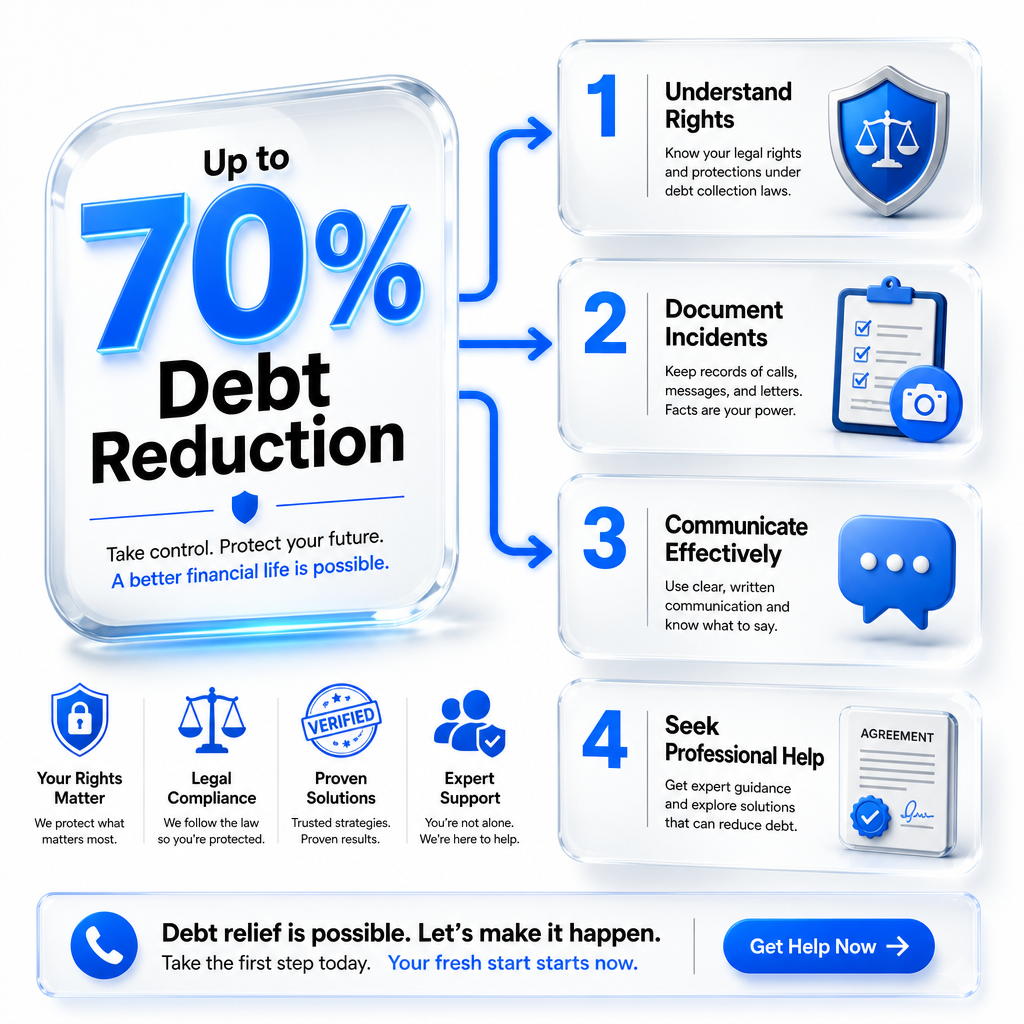

INFOGRAPHIC

Infographic summary

Steps to Protect Yourself From Harassment

Facing harassment from recovery agents can be daunting, but there are legal avenues and strategic measures you can adopt to protect yourself. The Reserve Bank of India (RBI) has clear guidelines prohibiting abusive practices by recovery agents. Awareness of these regulations is your first line of defense.

Understand Your Rights

Familiarize yourself with the RBI guidelines on debt recovery. Recovery agents are prohibited from using abusive language, making threats, or contacting you at odd hours. If such behavior occurs, consider lodging a formal complaint with the bank or the RBI ombudsman.

Maintain Documentation

Record all interactions with recovery agents. Keep copies of letters, emails, and call logs. Documentation serves as evidence if you decide to take legal action. For more detailed strategies, explore our anti-harassment services.

Negotiate Settlement

Engage with your lender to discuss possible settlements. This approach can prevent harassment by reducing the amount owed or restructuring the loan. Consider professional assistance for loan settlement and credit card settlement.

If harassment continues, consult a legal expert to explore filing a complaint in a Debt Recovery Tribunal (DRT). Legal guidance can ensure your rights are protected and harassment is curtailed.

Role of CredSettle in Avoiding Agent Harassment

Dealing with recovery agents can be a stressful experience, particularly when it crosses into harassment. CredSettle plays a crucial role in protecting individuals from such situations by offering specialized services designed to mitigate harassment risks. With a deep understanding of legal frameworks and consumer rights in India, CredSettle stands as an invaluable ally.

Firstly, CredSettle provides anti-harassment services that educate clients about their rights under the Reserve Bank of India's guidelines, which clearly outline fair practices for recovery agents. By understanding these rights, individuals are better equipped to handle any undue pressure or threats.

Moreover, CredSettle offers comprehensive loan settlement solutions, negotiating with creditors on behalf of clients to prevent aggressive recovery tactics. These services extend to personal loan settlements and credit card settlements, ensuring that clients can manage their debts efficiently without facing harassment.

Historically, many individuals have benefited from CredSettle’s intervention, which often results in significant reductions in the amounts owed, thereby decreasing the frequency and intensity of recovery agent visits. In cases involving NBFCs, CredSettle’s NBFC loan settlement services offer tailored approaches that align with the specific regulatory frameworks governing these financial bodies.

Sources & References

POPULAR SEARCHES

Frequently Asked Questions

A One-Time Settlement (OTS) is a negotiated agreement where you pay a reduced lump sum to settle your debt. CredSettle negotiates with lenders on your behalf to secure the best possible settlement terms while ensuring RBI compliance.

Yes, debt settlement is completely legal in India. CredSettle ensures all settlements are conducted in accordance with RBI guidelines and regulatory frameworks, protecting your rights throughout the process.

CredSettle provides legal intervention and communication services to stop harassment from recovery agents. We file formal complaints with RBI, NCH, and Cyber Police when necessary, and issue cease and desist notices to protect your rights.

Yes, settling a debt will likely reflect as "Settled" on your credit report, which can temporarily lower your CIBIL score. However, this is often a better alternative to default or bankruptcy, and you can rebuild your score over time once you are debt-free.

Absolutely. Credit card debt is one of the most common types of unsecured debt we settle. We negotiate with credit card issuers to reduce the outstanding balance, often achieving significant savings.

The duration varies based on your financial situation and the lender, but most settlements are negotiated within 3 to 12 months. We work to resolve it as quickly as possible to get you back on track.

We typically operate on a success-fee model for strictly settlement services, meaning you pay our service fee only after we successfully negotiate a settlement for you. However, specific legal protection services may have different structures.

While rare, if a bank refuses initially, our legal team escalates the matter, leveraging consumer protection laws and valid financial hardship evidence to compel them to the negotiation table.

Our primary expertise is in unsecured debts (personal loans, credit cards). Secured loans are harder to settle because the lender has collateral. However, we can sometimes assist with restructuring or legal advice depending on the case.

Yes, we adhere to strict data privacy standards. Your financial information is kept confidential and is only shared with authorized parties (like your creditors) for negotiation purposes with your consent.

CredSettle Logo

CredSettle is India's trusted loan management platform. Founded to help people break free from the cycle of debt, CredSettle has counselled countless individuals struggling with personal loans, credit cards, and app loans. We ensure you get ethical, RBI-compliant resolution strategies. CredSettle charges fees only on successful settlement, not upfront. CredSettle does not handle secured loans (home loans, car loans, gold loans).

Media Mentions

Media 1
Media 2
Media 3
Media 4
Media 1
Media 2
Media 3
Media 4
Media 1
Media 2
Media 3
Media 4
Media 1
Media 2
Media 3
Media 4
Media 1
Media 2
Media 3
Media 4
Media 1
Media 2
Media 3
Media 4
Media 1
Media 2
Media 3
Media 4
Media 1
Media 2
Media 3
Media 4
Chat with us on WhatsApp