Understanding Bank Recovery Agents and Their Role
In the financial ecosystem, bank recovery agents hold a pivotal role in debt recovery processes. As per the Reserve Bank of India (RBI) guidelines, these agents are appointed to recover dues from borrowers who have defaulted on their loans. Their involvement is crucial as they work to minimize the Non-Performing Assets (NPAs) of banks, ensuring the financial health of lending institutions. However, there are strict regulations governing their conduct, and understanding these is vital for debtors.
Legal Framework Governing Recovery Agents
The RBI has laid down comprehensive guidelines that recovery agents must adhere to. These include the Fair Practices Code and directives on ethical behavior. The agents are expected to maintain courtesy and avoid aggressive tactics. Failure to comply can lead to penalties for both the agent and the bank. In cases where borrowers feel harassed, they can seek redressal through the Banking Ombudsman or Consumer Courts.
Actions Permitted and Prohibited by Law
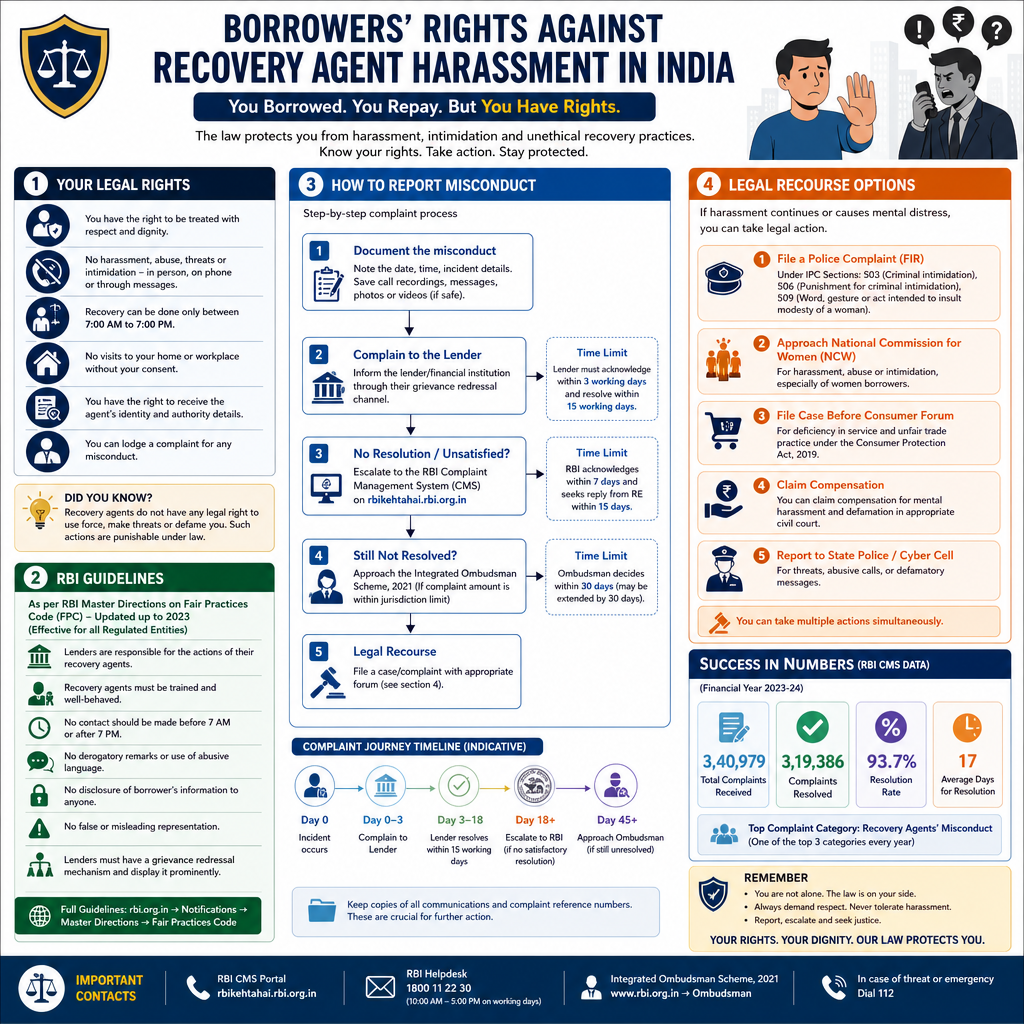
Recovery agents are allowed to contact borrowers and negotiate settlements. However, they cannot use coercion, threats, or embarrassment tactics. Visits must be made within prescribed hours, typically between 7 AM and 7 PM, unless otherwise consented to by the borrower. It is important for debtors to know their rights and report any misconduct to the appropriate authorities.
Case Study: Precedents of Misconduct
There have been notable cases where recovery agents overstepped their legal boundaries. In certain instances, the courts have ruled in favor of the debtor, reinforcing the need for adherence to ethical practices. Debtors facing undue harassment can explore options such as anti-harassment services to safeguard their rights.
Understanding the role and limitations of bank recovery agents is crucial for borrowers to protect themselves from potential misconduct. For those overwhelmed by debt, considering loan settlement options might provide an alternative pathway to financial stability.
Legal Rights Against Harassment by Recovery Agents
In India, the harassment of borrowers by bank recovery agents is a significant concern. The Reserve Bank of India (RBI) has set forth guidelines to curtail the misconduct of these agents. Understanding your legal rights can empower you to take action if faced with harassment.
Guidelines Under RBI
The RBI mandates that banks adhere to a code of conduct when recovering dues. Recovery agents are prohibited from using abusive language or intimidating tactics. They must respect the privacy of the borrower and refrain from contacting them at unreasonable hours. Furthermore, recovery agents should possess a valid authorization letter and identity card while approaching the borrower.
Legal Recourse Under Indian Law
Indian borrowers also have recourse under the law. The Consumer Protection Act, 2019, provides a platform to address grievances related to unfair trade practices, which may include harassment by recovery agents. Additionally, if the harassment involves threats or physical harm, borrowers can file a criminal complaint under the Indian Penal Code.
Case Studies and Precedents
Several legal precedents highlight the judiciary's stance against harassment by recovery agents. For instance, in ICICI Bank Ltd. v. Prakash Kaur, the Supreme Court of India ruled that banks are not permitted to hire recovery agents who resort to criminal intimidation.
Moreover, if you find yourself in such a predicament, consulting legal experts or services such as CredSettle's Anti-Harassment Services can provide guided assistance to protect your rights.
Understanding Debt Resolution Options
Beyond legal action, exploring debt settlement options can be a practical approach. Services like CredSettle Loan Settlement offer structured solutions to manage and settle debt amicably, reducing the need for recovery agent intervention.
Steps to Take When Harassed by Recovery Agents
Dealing with harassment from bank recovery agents can be distressing. Understanding your legal rights and knowing the appropriate steps to take is crucial for safeguarding yourself against intimidation and undue pressure. Here are the vital steps you should consider:
1. Know Your Rights
The Reserve Bank of India (RBI) has laid down guidelines to protect borrowers from harassment. According to these guidelines, recovery agents must not resort to abusive language or threats. Familiarize yourself with these regulations to ensure your rights are not violated.
2. Record Conversations
It is advisable to keep a record of all interactions with recovery agents. Document the date, time, and nature of the conversation. Recording phone calls, where legally permissible, can serve as evidence in case of a dispute.
3. File a Complaint
If you face harassment, promptly report the issue to the concerned bank. Use the bank's customer service channels and request a complaint number for reference. If unresolved, escalate the matter to the Banking Ombudsman.
4. Seek Legal Assistance
Consider consulting a legal expert to understand your options better. Legal professionals can advise on whether filing a case with the Debt Recovery Tribunal (DRT) is appropriate for your situation. For specialized services, consider anti-harassment services offered by CredSettle.
5. Explore Settlement Options
Engage in negotiations to settle the debt amicably. CredSettle provides loan settlement services that can help you negotiate favorable terms, possibly reducing the overall debt burden.
6. Report to Police if Necessary
In cases of extreme harassment, do not hesitate to report the matter to the local police. Provide them with documented evidence to support your claims.
By taking these steps, you can effectively manage harassment issues, ensuring a more controlled and lawful resolution of your debt concerns.
How to Document Harassment for Legal Protection
Documenting harassment by bank recovery agents is crucial to safeguarding your legal rights and ensuring that you have a strong case if the situation escalates. The Reserve Bank of India (RBI) has issued guidelines regarding the conduct of recovery agents; however, violations still occur. Proper documentation is a key step in proving any misconduct, which is important for processes such as filing complaints or seeking protection under the law.
Steps to Document Harassment
Keep Records of Communication: Always keep records of all communications with recovery agents. This includes phone calls, letters, emails, and messages. Note down the date, time, and content of each interaction. If possible, record phone calls after informing the agent that the call is being recorded, as per Indian laws.
Gather Physical Evidence: If you receive any physical letters or notices, make sure to retain copies. These documents can serve as evidence of the agent's conduct and the nature of their communication.
Witness Accounts: If the harassment occurs in the presence of others, obtain written statements from witnesses. These can be valuable in corroborating your account of events.
Photographic Evidence: In cases where recovery agents visit your home or workplace, take photographs or videos to record inappropriate behavior, bearing in mind privacy laws.
Legal Precedents and Protections
In India, the Debt Recovery Tribunal (DRT) and the Consumer Protection Act provide avenues for redressal. Instances of harassment were notably brought to light in the case of “ICICI Bank Ltd vs. Shanti Devi Sharma,” where the court highlighted the limits on recovery agents' actions. Such precedents emphasize the importance of documenting evidence, making it easier for courts or tribunals to assess claims of harassment.
For individuals facing pressure due to unpaid debts, resources like CredSettle's Loan Settlement services can offer valuable assistance in navigating these challenges while protecting your rights against aggressive recovery practices.
Legal Recourse: Filing a Complaint Against Recovery Agents
Dealing with aggressive recovery agents can be daunting, but understanding your legal rights can empower you to take appropriate action. In India, the conduct of bank recovery agents is regulated by the Reserve Bank of India (RBI). If you are facing harassment, you have the right to file a complaint against such agents through several legal avenues.
Understanding Your Rights
The RBI mandates that recovery agents must adhere to ethical practices and cannot engage in intimidation or harassment. If these guidelines are violated, you can seek legal recourse under the Consumer Protection Act, 2019, which prohibits unfair trade practices and services.
Procedure to File a Complaint
To initiate a complaint, you should first approach the bank's grievance redressal system. Most banks have a dedicated department to handle such issues. If the bank does not address your complaint satisfactorily, you can escalate the matter to the Banking Ombudsman, which is a quasi-judicial authority established by the RBI to resolve customer complaints against banks.
Document all instances of harassment, including dates, times, and any communication with the recovery agents.
Contact the bank's customer service to lodge a formal complaint.
If unresolved, file a complaint with the Banking Ombudsman using the prescribed form available on the RBI's official website.
For severe cases, you may also consider filing a police complaint under Section 506 of the Indian Penal Code, which deals with criminal intimidation. Additionally, seeking legal advice from experts can guide you through the complexities of bank settlements. CredSettle offers services in anti-harassment and loan settlement that can be invaluable in these situations.
By taking these steps, you can protect yourself from undue stress and ensure that recovery agents adhere to the law.
Comparison of Options: Legal vs. Negotiated Solutions
When dealing with harassment from bank recovery agents, borrowers often face a dilemma: should they pursue legal recourse or opt for a negotiated settlement? Understanding the intricacies of each option can help individuals make informed decisions.
Legal Solutions
Legal avenues, such as filing a complaint with the Reserve Bank of India (RBI) or approaching the Debt Recovery Tribunal (DRT), are typically pursued when harassment escalates or when rights are blatantly violated. These options provide a formal mechanism to address grievances and can result in punitive actions against errant recovery agents. However, legal solutions can be time-consuming and may require substantial documentation and legal fees.
Negotiated Solutions
On the other hand, negotiated solutions involve directly engaging with the bank or financial institution to reach a mutually agreeable settlement. This approach can be quicker and less formal, often involving a restructuring of the repayment terms. Services like loan settlement or anti-harassment assistance can facilitate these negotiations and provide expert guidance.
Parameter | Legal Solutions | Negotiated Solutions |
|---|
Who it's for | Borrowers facing severe harassment or rights violations | Borrowers seeking a quick resolution without legal proceedings |
What it does | Provides formal grievance redressal and potential penalties for agents | Facilitates direct negotiation for revised repayment terms |
Impact | May deter future harassment through legal accountability | Often results in faster relief and financial adjustments |
Cost | Potentially high due to legal fees and court costs | Usually lower, involving negotiation fees or no cost |
Each approach has its advantages and potential drawbacks, making it essential for borrowers to assess their unique circumstances and potentially consult with professionals, such as those at CredSettle, who specialize in both legal and negotiated debt solutions.
How CredSettle Can Help in Managing Debt Recovery Issues
Facing harassment from bank recovery agents can be daunting, especially when you are unaware of your legal rights. CredSettle offers comprehensive solutions designed to alleviate the stress associated with debt recovery processes, providing both legal guidance and practical assistance.
Expert Legal Intervention
CredSettle's team of legal experts specializes in Indian financial legislation, including the directives issued by the Reserve Bank of India (RBI) concerning fair recovery practices. By engaging CredSettle, you can ensure that any harassment from recovery agents is promptly addressed through appropriate legal channels.
Tailored Debt Settlement Services
Loan Settlement: Our specialists negotiate with banks to provide feasible repayment plans, helping you achieve financial stability.
Personal Loan Settlement: We assist in restructuring your personal loans to minimize financial burden.
Credit Card Settlement: Our experts devise strategies to settle outstanding credit card dues effectively.
NBFC Loan Settlement: We facilitate negotiations with Non-Banking Financial Companies to secure favorable terms.
Anti-Harassment Measures
Should you experience undue pressure or harassment, CredSettle offers specialized anti-harassment services. Our team will communicate directly with recovery agents to curb any unethical practices, ensuring compliance with legal standards set forth by the Debt Recovery Tribunal (DRT).
By choosing CredSettle, you are not only opting for expert advice but also partnering with a team that prioritizes your financial well-being and legal rights. This comprehensive support framework allows you to focus on regaining control over your finances without the constant stress of dealing with aggressive recovery agents.
Sources & References