

Credit Card Debt vs. Personal Loan Default in India

Understand RBI Guidelines and Your Legal Rights for Debt Management

AJ

Ashish Jhangra

Reviewed by CredSettle Team

17-08-2026
11 min read
Credit Card Debt vs. Personal Loan Default in India
0.0/5
Client Rating
0Cr+
Debt Settled
0+
Happy Clients

Share this insight

Help someone else stay informed about debt relief.

KEY TAKEAWAYS

Understand the differences between credit card debt and personal loan default.

Learn about RBI guidelines for debt management in India.

Know your legal rights as a borrower facing default.

Discover strategies for managing credit card debt effectively.

Explore options for handling personal loan defaults.

Understanding Credit Card Debt and Personal Loan Default

In India, the financial landscape is governed by various regulations and guidelines set by authorities like the Reserve Bank of India (RBI). When dealing with credit card debt and personal loan default, it is crucial to understand the distinct legal frameworks and implications that govern these financial obligations.

Credit Card Debt in India

Credit card debt arises when cardholders fail to pay their outstanding dues. The RBI mandates that credit card issuers provide detailed information about interest rates, penalties, and charges. According to the RBI, banks must follow a fair practice code, ensuring debt recovery is conducted in a lawful manner. If you face harassment from recovery agents, you can seek protection under the Consumer Protection Act. For assistance, consider exploring anti-harassment services to safeguard your rights.

Personal Loan Default

Defaults on personal loans can lead to more severe consequences, such as legal proceedings initiated by lenders. Under the Securitisation and Reconstruction of Financial Assets and Enforcement of Security Interest Act (SARFAESI Act), lenders can seize assets without court intervention if borrowers fail to repay. It is critical to be aware of your rights and the legal procedures involved. For example, the Debts Recovery Tribunal (DRT) handles disputes related to loan defaults. Engaging with a personal loan settlement service can provide strategic advice to manage defaults effectively.

Both credit card debt and personal loan default have stringent repercussions. The RBI's guidelines emphasize transparency and fairness in recovery processes. Cardholders and borrowers should be informed about their rights and consider seeking professional advice to navigate these financial challenges. For more insights on managing debts, visit credit card settlement services which offer valuable guidance.

RBI Guidelines on Credit Card Debt in India

The Reserve Bank of India (RBI) plays a pivotal role in governing the credit card industry, laying down specific guidelines to protect both lenders and consumers. These guidelines are designed to ensure transparency and fairness in credit card operations, mitigating risks associated with excessive debt accumulation.

One of the core mandates by the RBI is the requirement for banks to clearly communicate all terms and conditions related to credit card issuance and usage. Banks must disclose the interest rates, fees, and any other charges applicable to the cardholder, ensuring consumers are informed prior to their acceptance of a credit card.

Furthermore, the RBI guidelines stress the importance of fair practices in debt recovery. Banks and financial institutions are prohibited from employing aggressive recovery tactics, such as harassment or intimidation of debtors. This aligns with services like CredSettle's Anti-Harassment offerings, which assist consumers in understanding and asserting their rights during debt recovery processes.

In cases of credit card defaults, the RBI mandates that banks adopt a structured approach, including issuing reminders and providing clear information regarding the outstanding dues. Importantly, there is an emphasis on providing consumers with suitable repayment options before declaring an account as a Non-Performing Asset (NPA).

Moreover, recent amendments require that any changes to the interest rates or fees are communicated in advance, allowing cardholders to manage their finances more effectively. Should disputes arise, the RBI has also established a redressal mechanism, encouraging consumers to seek resolution through their respective bank's grievance channels before escalating matters to the Banking Ombudsman.

For individuals facing challenges with credit card liabilities, services such as CredSettle's Credit Card Settlement provide strategic solutions to negotiate and settle debts effectively, in compliance with RBI regulations.

RBI Guidelines on Personal Loan Default in India

The Reserve Bank of India (RBI) has established comprehensive guidelines to safeguard both borrowers and lenders when it comes to personal loan defaults. Understanding these guidelines is crucial for borrowers facing financial difficulties. The RBI mandates that lenders follow a fair and transparent process when dealing with defaults, ensuring that borrowers are treated ethically throughout the recovery process.

One of the key aspects of the RBI guidelines is the requirement for banks and non-banking financial companies (NBFCs) to classify accounts as Non-Performing Assets (NPAs) if the borrower fails to make payments for 90 days. Once classified as an NPA, the lender must adhere to specific procedures for recovery, which often involve engaging with Debt Recovery Tribunals (DRTs) for amounts exceeding ₹20 lakh.

Lenders are required to provide borrowers with a notice prior to initiating any recovery proceedings. This notice should clearly outline the outstanding amount, the due date, and the consequences of failing to repay. The RBI also emphasizes that all recovery agents must comply with the Fair Practices Code, preventing harassment of borrowers. Borrowers facing such issues can seek assistance from services like anti-harassment support.

Furthermore, the RBI encourages lenders to explore amicable settlement options. Borrowers can negotiate a personal loan settlement to reduce their outstanding balance, potentially avoiding legal action. For personalized assistance, borrowers can consult with experts through platforms such as CredSettle's personal loan settlement services.

In summary, the RBI's guidelines aim to maintain a balance between protecting borrowers' rights and allowing lenders to recover dues legally. Borrowers should be aware of their rights and the avenues available to them to handle personal loan defaults effectively.

In India, borrowers facing default on credit card debt or personal loans are safeguarded by specific legal rights and regulatory guidelines. The Reserve Bank of India (RBI) provides a framework that financial institutions must adhere to, ensuring that borrowers are treated fairly during recovery processes. Understanding these rights is crucial for borrowers to protect themselves against unlawful practices and potential harassment.

  • Fair Treatment: Banks and financial institutions are mandated by the RBI to treat borrowers with respect and dignity. Aggressive recovery methods or harassment are prohibited. Borrowers experiencing such issues can find support through anti-harassment services.

  • Notice Before Legal Action: Lenders must provide a notice period before initiating any legal action. This allows borrowers ample time to respond or seek legal counsel.

  • Rehabilitation Opportunities: Borrowers have the right to negotiate loan settlements or restructuring options. Services like loan settlement can assist in achieving a viable agreement with creditors.

In instances where default leads to legal proceedings, Debt Recovery Tribunals (DRTs) are empowered to handle such disputes. Borrowers can approach DRTs for resolution which ensures a fair trial. It's also beneficial to explore avenues like personal loan settlement and credit card settlement to mitigate repercussions of default.

Case Study

Historically, the case of 'ICICI Bank vs. Shanti Devi Sharma' highlighted the importance of adherence to RBI norms during recovery. The court's ruling emphasized the need for humane recovery practices, setting a precedent that reinforces borrowers' rights against coercive tactics.

Borrowers must remain informed and proactive in safeguarding their rights by utilizing available resources and legal frameworks effectively.

Strategies for Managing Credit Card Debt

In India, managing credit card debt effectively involves understanding legal rights and adhering to guidelines set by regulatory bodies like the Reserve Bank of India (RBI). The RBI provides specific directives on how financial institutions should handle credit card dues, offering consumers certain protections. Here are some strategies to consider:

The RBI mandates that credit card issuers must provide detailed statements with clear due dates and interest rates. Familiarize yourself with these guidelines, as they protect you from unfair practices. If a bank harasses you for payment, you can explore legal anti-harassment services for support.
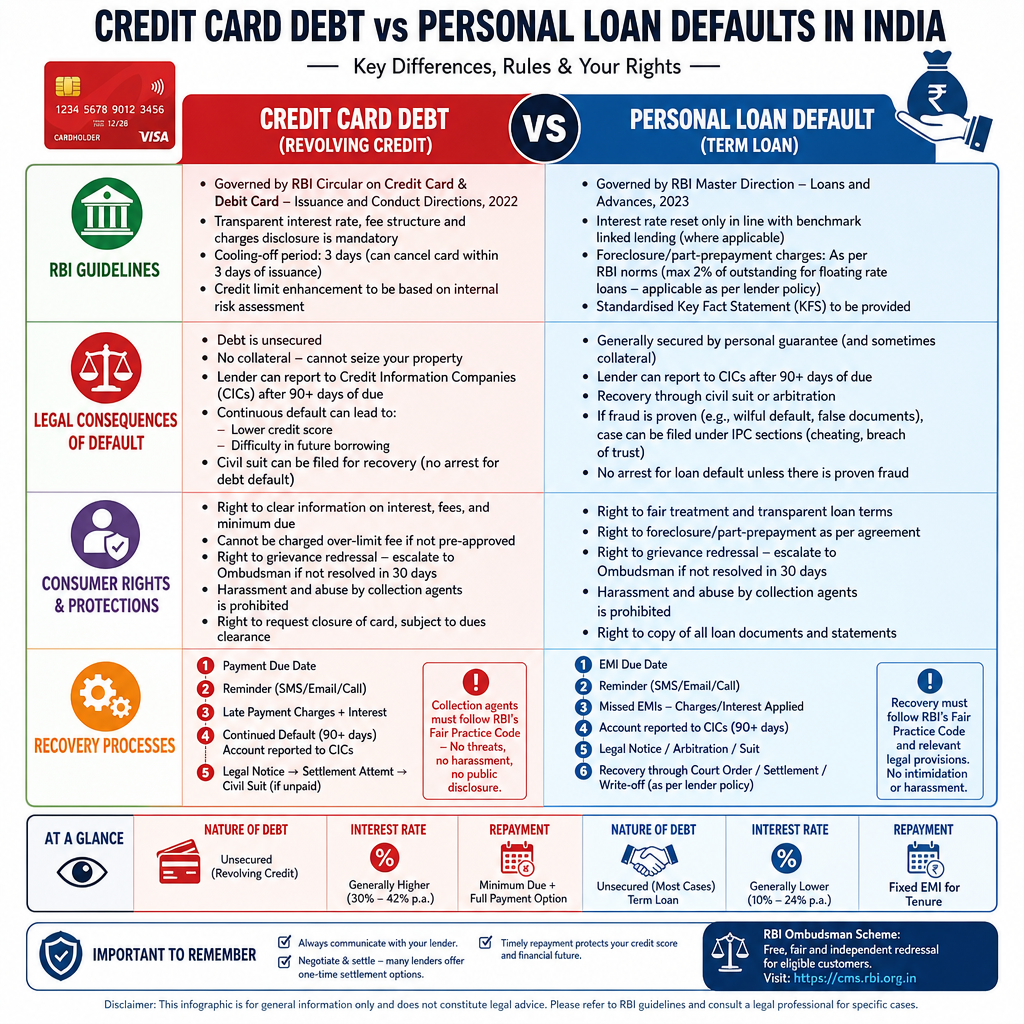

INFOGRAPHIC

Infographic summary

2. Prioritize Payments

Prioritize paying off credit card debt with the highest interest rates first, often referred to as the avalanche method. This minimizes the amount of interest paid over time. Alternatively, the snowball method suggests paying off the smallest debts first, building momentum.

3. Settlement Options

If your debt becomes unmanageable, consider negotiating a settlement. Services like credit card settlement can help reduce the total amount owed through negotiations with creditors.

The Securitisation and Reconstruction of Financial Assets and Enforcement of Security Interest (SARFAESI) Act and Debt Recovery Tribunals (DRTs) provide mechanisms for addressing disputes. Being aware of these can empower you to challenge unjust claims legally.

5. Financial Counseling

Engage with financial counseling services to create a comprehensive budget plan. Understanding your cash flow can help you allocate funds more effectively, ensuring timely payments.

By leveraging these strategies and legal protections, you can take proactive steps to manage and mitigate credit card debt challenges in India.

Strategies for Handling Personal Loan Default

Handling a personal loan default in India requires a strategic approach to manage financial setbacks and safeguard legal rights. The Reserve Bank of India (RBI) provides guidelines that can be leveraged by borrowers to navigate these challenges effectively. Understanding these strategies can help individuals avoid severe consequences such as litigation or damaged credit scores.

Initiate Communication with Your Lender

One of the most effective strategies is to engage in proactive communication with your lender. This involves informing them about your financial difficulties and negotiating a feasible repayment plan. Lenders are often open to restructuring loans to avoid the lengthy processes of debt recovery tribunals.

Utilize RBI Guidelines for Settlement

The RBI has laid down certain guidelines that can assist borrowers in settling their loans. Borrowers should be aware that lenders are advised to consider the genuine difficulties of borrowers and offer options like loan restructuring or settlement. For more information on structured settlements, visit CredSettle's Personal Loan Settlement page.

Seek Help from Debt Resolution Services

Enlisting the help of a debt resolution service can provide clarity and professionalism in negotiations with lenders. Experts can offer tailored advice and representation, minimizing harassment from collection agencies. Explore CredSettle's Anti-Harassment Services for more support.

When default reaches legal territories, understanding the Debt Recovery Tribunal (DRT) procedures becomes crucial. The DRT offers a forum for resolving disputes between borrowers and financial institutions. However, engaging legal counsel to navigate these proceedings is advisable to avoid missteps.

Opting for a Non-Banking Financial Company (NBFC) loan settlement can sometimes be more flexible. Borrowers can explore options at CredSettle's NBFC Loan Settlement page to understand tailored solutions.

Credit Card Debt vs. Personal Loan Default: A Comparison

In India, the rise in personal borrowing, especially through credit cards and personal loans, has led to a significant increase in defaults. Understanding the differences between credit card debt and personal loan default is crucial for borrowers. Both financial obligations come with distinct legal implications, and the Reserve Bank of India (RBI) guidelines provide a framework for managing these situations.

Parameter

Credit Card Debt

Personal Loan Default

Who it's for

Individuals with flexible spending needs

Borrowers requiring a lump sum for specific purposes

What it does

Allows revolving credit with variable interest rates

Provides a fixed sum with a predetermined repayment schedule

Impact of Default

Higher interest rates, potential legal action

Legal notices, possibility of DRT involvement

Cost

Generally higher interest rates and penalties

Structured repayment but penalties for defaults

From a legal standpoint, defaulting on credit card payments could lead to debt recovery procedures including collection calls and potential court involvement. The Credit Card Settlement service at CredSettle can aid in negotiating better terms with banks. On the other hand, personal loan defaults can escalate to Debt Recovery Tribunal (DRT) proceedings, especially with larger sums. As such, Personal Loan Settlement services are vital for resolving these issues.

Both types of default can affect your credit score adversely, impacting future borrowing potential. It's essential to remain informed about your rights under RBI guidelines, which protect consumers against unlawful recovery practices. In case of harassment, CredSettle offers anti-harassment services to support borrowers.

Sources & References

POPULAR SEARCHES

Frequently Asked Questions

A One-Time Settlement (OTS) is a negotiated agreement where you pay a reduced lump sum to settle your debt. CredSettle negotiates with lenders on your behalf to secure the best possible settlement terms while ensuring RBI compliance.

Yes, debt settlement is completely legal in India. CredSettle ensures all settlements are conducted in accordance with RBI guidelines and regulatory frameworks, protecting your rights throughout the process.

CredSettle provides legal intervention and communication services to stop harassment from recovery agents. We file formal complaints with RBI, NCH, and Cyber Police when necessary, and issue cease and desist notices to protect your rights.

Yes, settling a debt will likely reflect as "Settled" on your credit report, which can temporarily lower your CIBIL score. However, this is often a better alternative to default or bankruptcy, and you can rebuild your score over time once you are debt-free.

Absolutely. Credit card debt is one of the most common types of unsecured debt we settle. We negotiate with credit card issuers to reduce the outstanding balance, often achieving significant savings.

The duration varies based on your financial situation and the lender, but most settlements are negotiated within 3 to 12 months. We work to resolve it as quickly as possible to get you back on track.

We typically operate on a success-fee model for strictly settlement services, meaning you pay our service fee only after we successfully negotiate a settlement for you. However, specific legal protection services may have different structures.

While rare, if a bank refuses initially, our legal team escalates the matter, leveraging consumer protection laws and valid financial hardship evidence to compel them to the negotiation table.

Our primary expertise is in unsecured debts (personal loans, credit cards). Secured loans are harder to settle because the lender has collateral. However, we can sometimes assist with restructuring or legal advice depending on the case.

Yes, we adhere to strict data privacy standards. Your financial information is kept confidential and is only shared with authorized parties (like your creditors) for negotiation purposes with your consent.

CredSettle Logo

CredSettle is India's trusted loan management platform. Founded to help people break free from the cycle of debt, CredSettle has counselled countless individuals struggling with personal loans, credit cards, and app loans. We ensure you get ethical, RBI-compliant resolution strategies. CredSettle charges fees only on successful settlement, not upfront. CredSettle does not handle secured loans (home loans, car loans, gold loans).

Media Mentions

Media 1
Media 2
Media 3
Media 4
Media 1
Media 2
Media 3
Media 4
Media 1
Media 2
Media 3
Media 4
Media 1
Media 2
Media 3
Media 4
Media 1
Media 2
Media 3
Media 4
Media 1
Media 2
Media 3
Media 4
Media 1
Media 2
Media 3
Media 4
Media 1
Media 2
Media 3
Media 4
Chat with us on WhatsApp